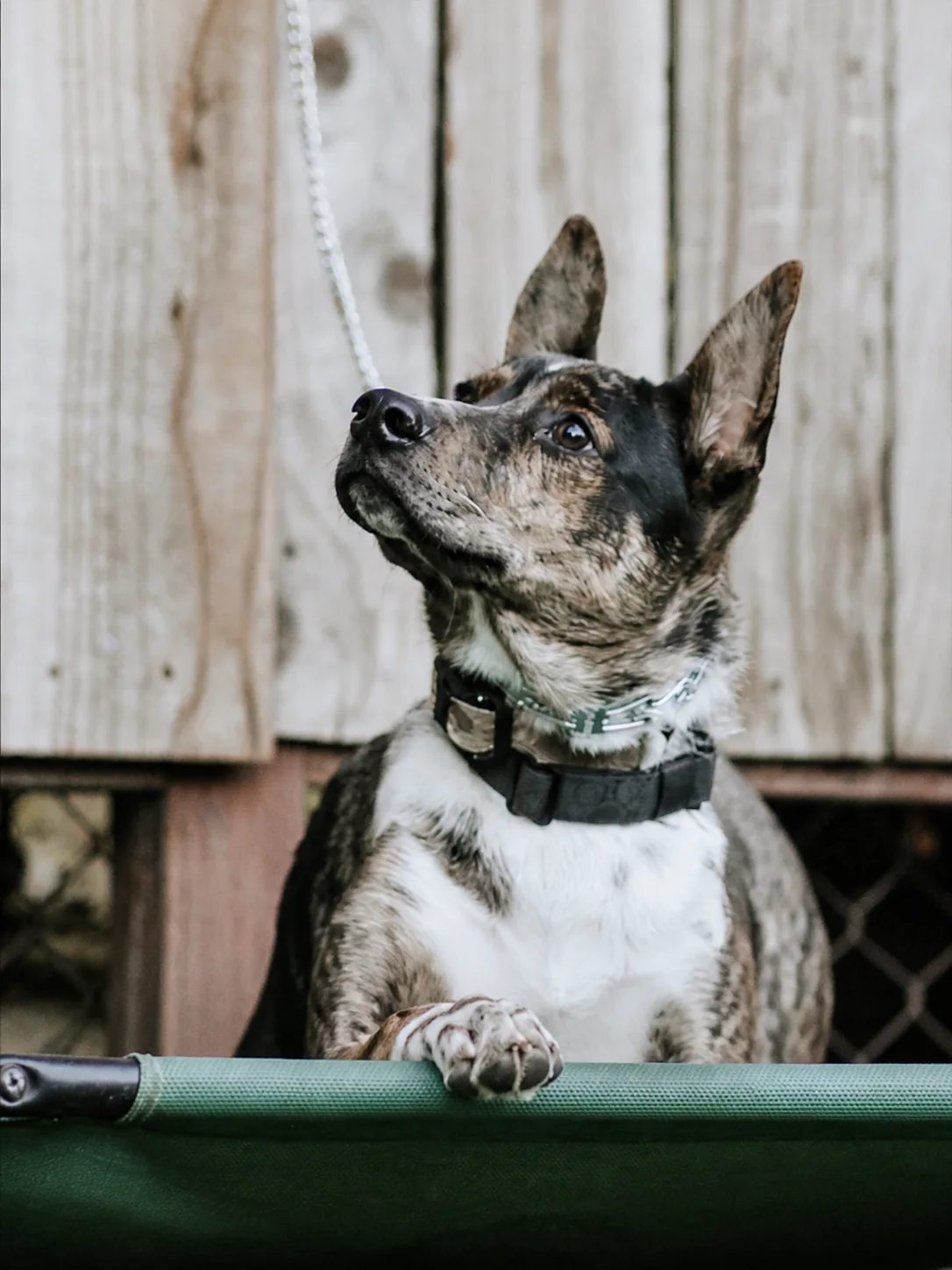
Leash pulling
Build calmer departures, better connection, and more manageable walks from the front door onward.
 True BalanceCanineBook training
Training happens in your home, where routines and challenges are easiest to understand. We focus on humane, practical coaching for the behaviors that affect your daily life—and give you clear ways to keep making progress.
Book at-home trainingView packages & pricesReal support where life happens.
Compare all services & pricesSpecific challenges
Every dog and household is different. These are common starting points—not a one-size-fits-all checklist.
Build calmer departures, better connection, and more manageable walks from the front door onward.
Create clearer routines for visitors, arrivals, and excited everyday moments.
Look at triggers such as windows, noises, doorbells, and visitors, then build a practical response plan.
Develop routines that help your dog relax, wait, and move through household transitions.
Work on doorways, counters, boundaries, attention, and other behaviors that shape daily life.
Support dogs who feel uncertain around new situations, sounds, people, or parts of the home routine.
Training prices
Private lesson packages move from foundations to advanced or behavior-focused support. Graduate sessions make it easier to keep practicing after a program ends.
Training option
Early guidance for puppies under seven months, with practical foundations for calmer routines and clearer communication at home.
Training option
Build dependable everyday manners and the handling skills needed to keep practicing between sessions.
Training option
Strengthen familiar skills and apply them around greater distractions, new environments, and real-life routines.
Training option
Individualized support for more complex concerns, with careful assessment, practical management, and guided skill-building.
Training option
Guided real-world practice for graduates who are ready to maintain skills and build confidence beyond their original program.
Training option
A focused refresher for previous clients who want help sharpening a familiar skill, routine, or handling plan.
Training prices are package totals or per-session rates as labeled. A conversation about goals and fit comes before enrollment; package pricing is also available for graduate and tune-up sessions.
What it can include
A good fit for
The process
At home, we look at what is happening, what may be contributing to it, and what a useful outcome looks like.
We break the challenge into understandable steps and practice in the environment where it actually occurs.
You receive clear, realistic next steps so the household can continue building progress between sessions.
Helpful before you begin
These short guides explain what you may notice, what it can mean, and how to choose a more useful next step.
A dog can know a skill and still be unable to use it when the environment becomes too difficult.
Training builds a new skill. Management changes the setup so the old behavior is not rehearsed all day in the meantime.
The goal is a dog who can experience the world with confidence, not a dog who must greet everyone or tolerate overwhelming situations.
Questions about at-home training
Puppy training is six lessons for $700, basic obedience is eight lessons for $850, advanced obedience is twelve lessons for $1,200, and behavioral modification is fourteen lessons for $1,600. Graduate socialization and tune-up sessions are $125 per session, with package pricing available.
Yes. Sessions are designed around your home environment so we can work with the routines, spaces, and challenges that are actually part of daily life.
Common areas include leash pulling, jumping, barking, difficulty settling, household manners, confidence, and adapting to new routines. Describe what is happening in your inquiry so fit and scope can be discussed.
The approach is humane, clear, and responsive to the individual dog. Trust, useful reinforcement, and practical communication are central.
Start by describing the behavior in your inquiry. We can discuss whether the concern is a fit and whether veterinary or specialized behavioral support should be part of the plan.